
20. Oktober 2026 | Meldung
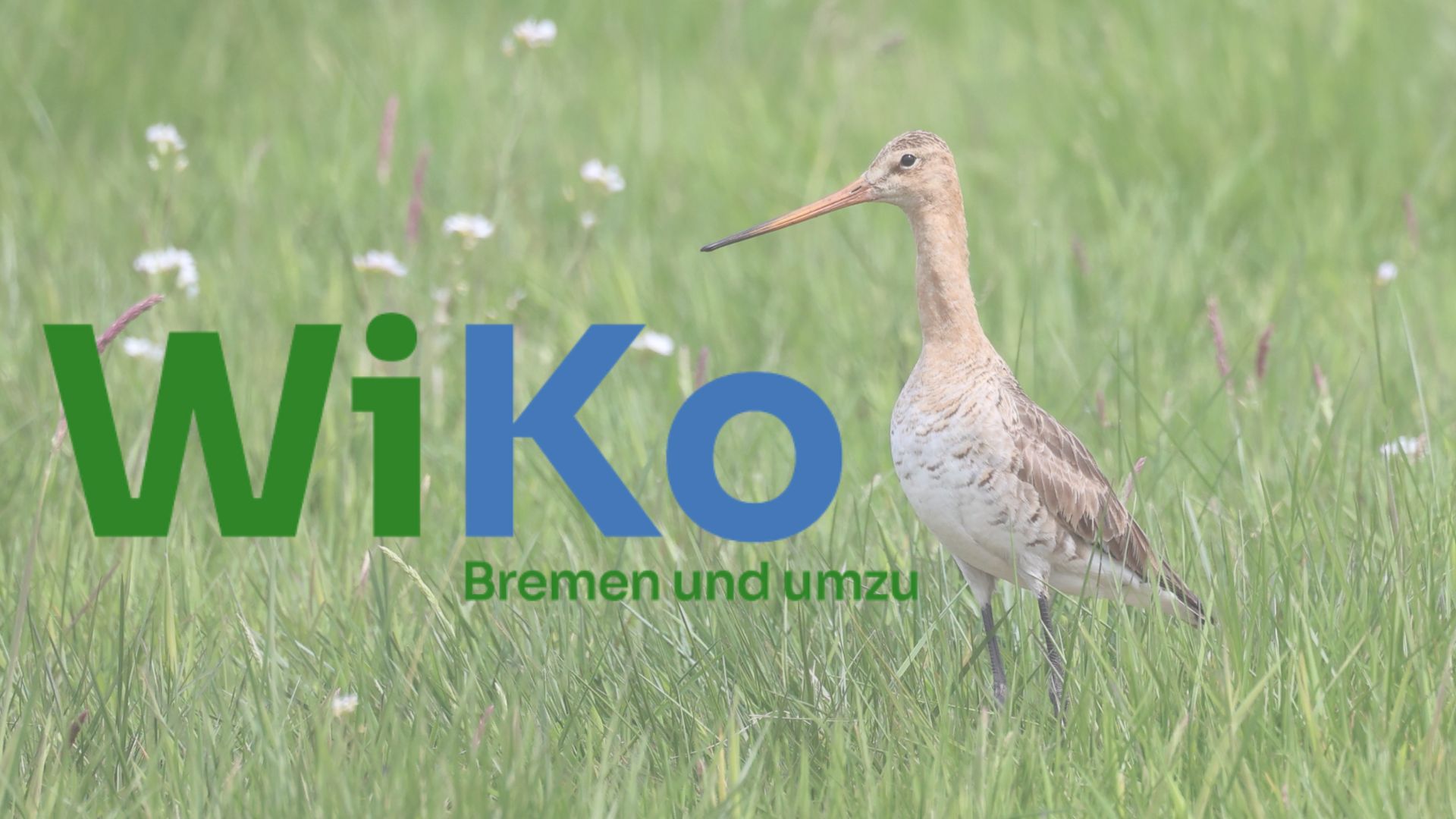
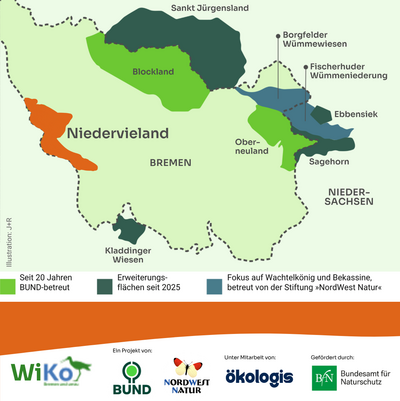
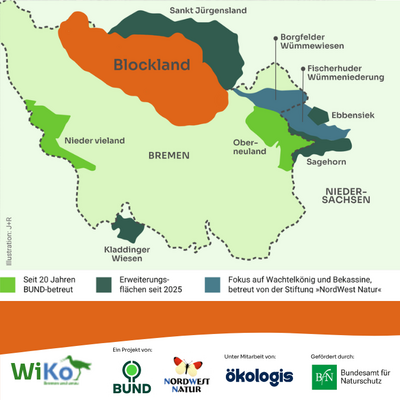
WiKo Bremen stands for cooperative meadow bird conservation in Bremen and the surrounding pasture areas of Lower Saxony. The BUND Bremen conducts this project in cooperation with the foundation NordWest Natur (NWN).
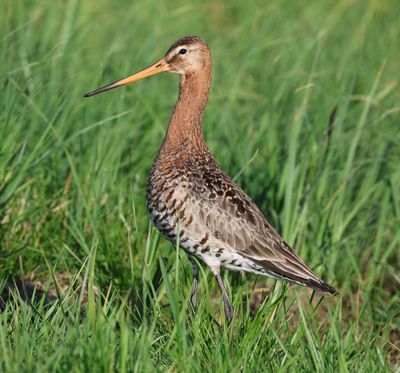
Together with local farmers, we began our meadow bird conservation work in the Blockland 20 years ago. Our characteristic birds of grasslands and pastures, such as the Northern Lapwing (Vanellus vanellus), Black-tailed Godwit (Limosa limosa), Common Redshank (Tringa totanus), and Eurasian Curlew (Numenius arquata), had been declining steadily. The idea was not to impose broad restrictions on agriculture, but rather to protect the birds specifically at their breeding sites. What initially started as pure nest protection was soon expanded to include targeted measures for chick protection, habitat improvement, and predator control - with great success! From 250 breeding pairs in 2005, the number has now increased to almost 800 pairs. The strong cooperation with all local stakeholders is another defining strength of the project.
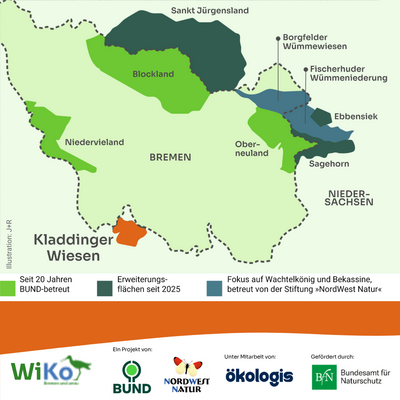
With the new funding from the Federal Agency for Nature Conservation, we have been able to expand even further. In addition to extending the project area into the surrounding regions of Lower Saxony, the programme will also include additional valuable species such as the Short-eared Owl, Corncrake, Garganey, and Shoveler. New methods, such as thermal-imaging drone technology, will be at the forefront of the project. Under the short title ‘WiKo Bremen,’ we — together with the NordWest Natur Foundation, which works to protect the endangered species such as Common Snipe and Corncrake in the Borgfeld Wümme meadows — received approval from the BMUKN.
More information will follow soon!
 Eine der WiKo-Zielarten: Die Sumpfohreule (Asio flammeus).
(Arno Schoppenhorst
/
WiKo)
20. Oktober 2026 | Meldung
14. Oktober 2026 | Meldung

28. August 2026 | Meldung
19. August 2026 | Meldung
17. Juli 2026 | Meldung

09. Juli 2026 | Meldung

12. Juni 2026 | Meldung
21. Mai 2026 | Meldung

20. Mai 2026 | Publikation

13. Mai 2026 | Meldung

28. April 2026 | Meldung

02. April 2026 | Meldung
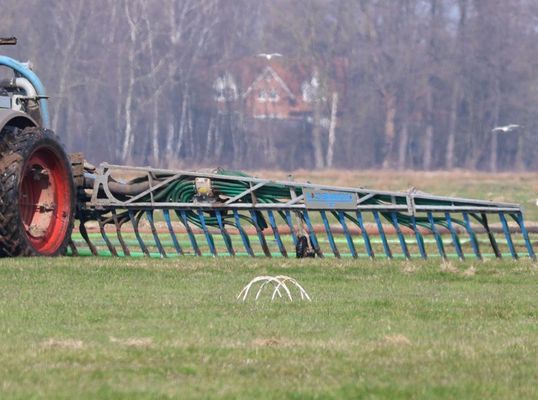
In the programme we have developed over the years divers methods of nest protection together with local farmers.
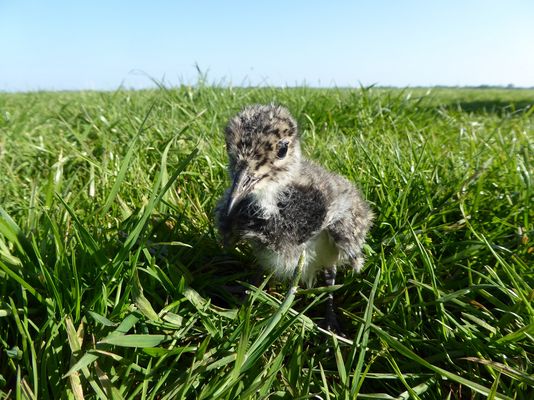
As so called precocial birds, meadow birds such as snipe and curlew leave their nests as soon as they have hatched. We have developed different measures of sensitive protection.

In order for finding food and the proper habitat, a maintenance of the landscape is indispensable.
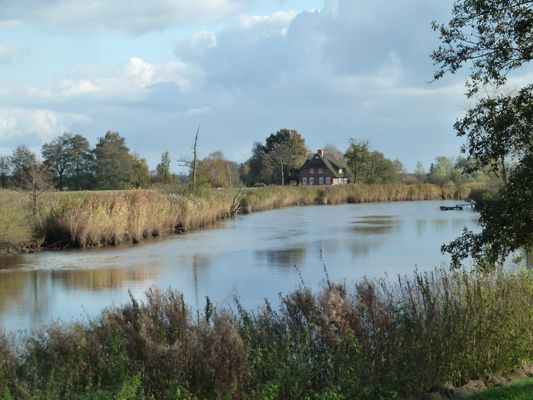
Measures of predation management
The WiKo project is funded by the Bundesamt für Naturschutz (BfN) in the national protection programme of endemic and highly endangered species by means of the Bundesumweltministerium.
 Das Projekt WiKo Bremen wird durch das BfN im nationalen Artenhilfsprogramm mit Mitteln des Bundesumweltministeriums gefördert.
(BMUKN und Bfn
/
BMUKN
/
Bfn)
BUND-Bestellkorb